
Smart Operations
Smart Parking System: From Vehicle Entry to Better Parking Operations
A parking facility is a sequence, not a place. Smart parking is what connects the points along that sequence into one operation.
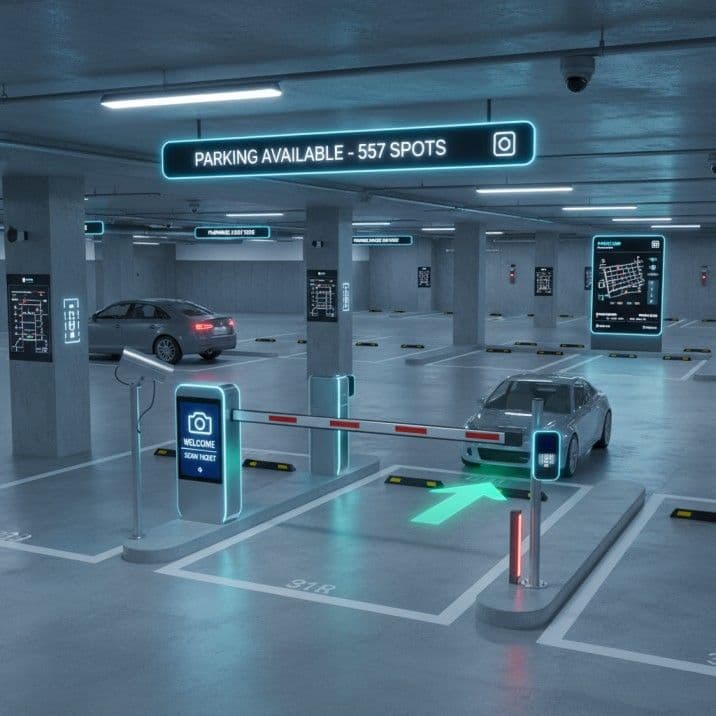
A guided parking environment. Conceptual representation.
On This Page
Parking is usually experienced as a series of unconnected moments: a barrier, a search for a space, a payment machine, another barrier. Each works on its own. None of them knows about the others.
Smart parking is the practice of connecting them. This article follows the journey from entry to exit and covers what each stage contributes to the operation as a whole.
What Is a Smart Parking System?
A smart parking system connects vehicle access, parking guidance, occupancy monitoring, payment, surveillance, and centralized management into a coordinated parking operation.
The distinction from conventional parking equipment is not any individual component. It is that the components share information rather than operating independently.
Challenges in Conventional Parking Operations
Where the elements are disconnected, familiar difficulties follow. Drivers circulate looking for spaces that may not exist. Operators know how many vehicles entered but not where they are. Payment is a separate encounter rather than part of the visit. And the state of the facility has to be assembled by asking several systems separately.
The Smart Parking Journey
- 01Enter
- 02Find
- 03Park
- 04Pay
- 05Exit
Conceptual parking journey. Not a technical architecture.
Each stage below corresponds to a point in this sequence.
Vehicle Access
Entry and exit are the two controlled points of the journey. Handling them in an organized way keeps the flow of vehicles orderly and gives the facility a reliable count of what is inside.
Parking Guidance
Guidance turns a car park from something drivers search through into something they are directed through. Signage and indicators point toward areas with availability, which shortens the time a vehicle spends circulating.
Occupancy Monitoring
Occupancy is the operator's side of the same information the driver receives. Knowing how much of the facility is in use, and where, supports both guidance and an understanding of how the facility is utilized over time.
Payment Solutions
Payment handled as part of the parking operation rather than as an isolated transaction keeps the visit continuous and the records consistent.
Parking Surveillance
Parking areas are part of the facility and benefit from the same visibility as the rest of it. Surveillance supports both parking security and general operational awareness of what is happening in the space.
Centralized Parking Management
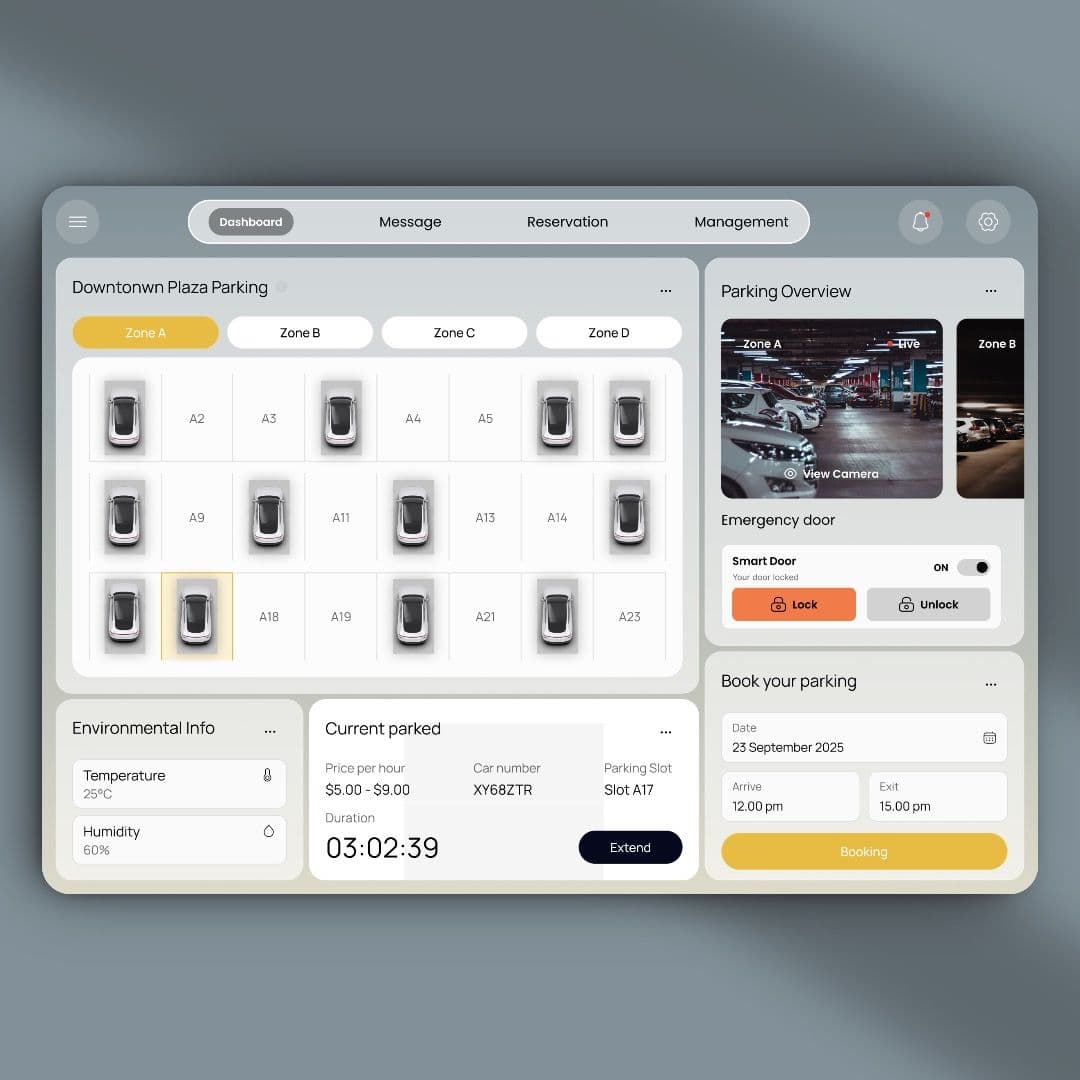
Centralized management is where the separate stages become one operation. Zones, occupancy, and parking activity are read from a single view rather than assembled from several.
Benefits for Parking Operators
- Traffic flow
- Movement through the facility handled in an orderly way.
- Utilization
- A clearer picture of how much of the facility is in use.
- Security
- Parking areas covered by surveillance.
- Efficiency
- Parking managed from one place rather than several.
Benefits for Parking Users
From the driver's side the benefit is simpler: less time spent looking for a space, clearer direction on arrival, and a payment step that fits into the visit rather than interrupting it.
Conclusion
Smart parking does not add stages to the parking journey. It connects the ones that already exist, so that entry, guidance, occupancy, payment, and surveillance describe a single operation rather than five separate ones.