
Building & Energy
Building Management System: A Smarter Way to Monitor Building Operations
A building runs on many systems at once. A building management system is what lets the people responsible for it see how the building is operating without walking the floors to find out.
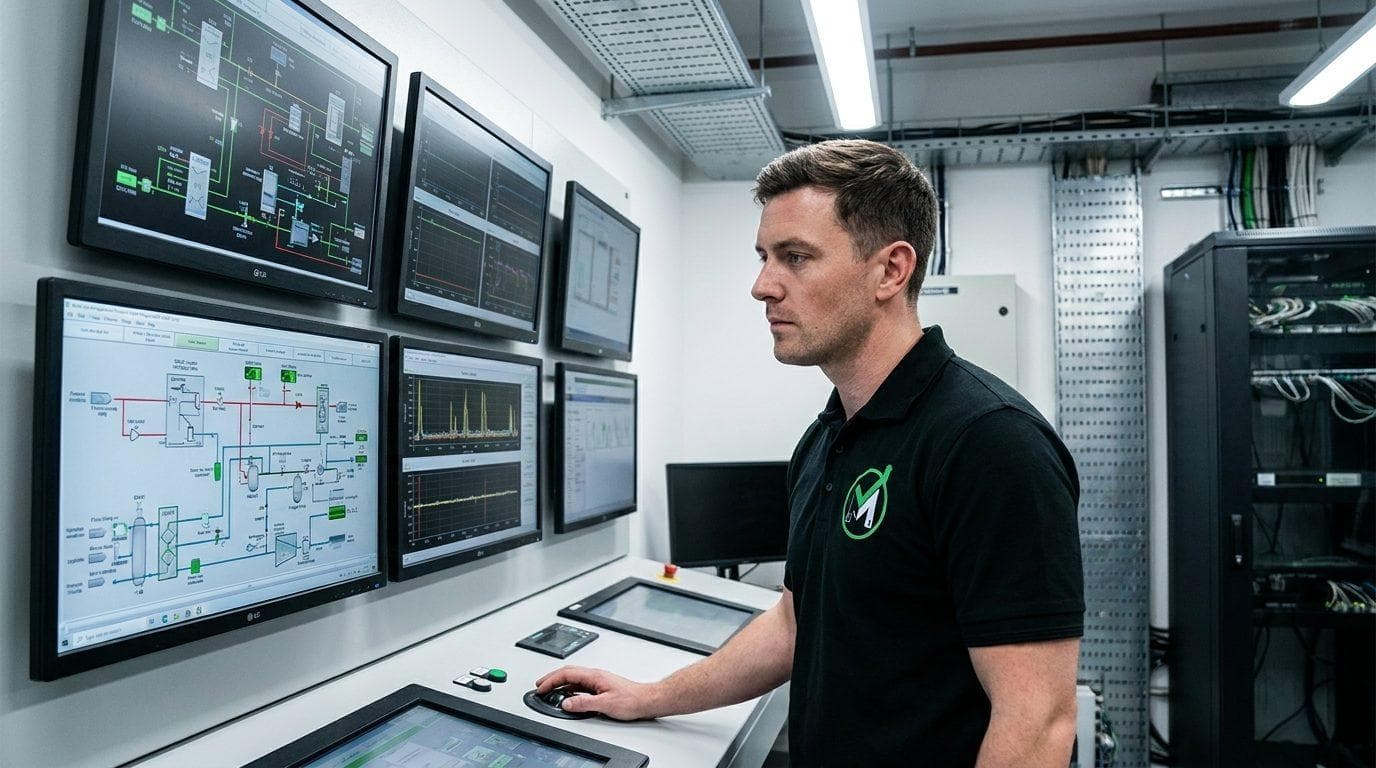
Building systems monitored from a central operating position.
On This Page
Building systems are usually installed separately, commissioned separately, and monitored separately. Each works. Together they describe how the building is actually operating — but only if someone can see them at the same time.
A building management system provides that shared view. This article covers what a BMS is, what it typically monitors, and why centralized visibility changes how a facility team works.
What Is a Building Management System?
A building management system is a centralized environment for monitoring and managing connected building systems. Instead of each system being checked on its own terms and in its own location, their status is brought to a common point.
The word that matters is connected. A BMS does not make separate systems into one system; it makes their information available in one place.
Why Building Operations Need Centralized Visibility
A facility team working from separate systems spends its attention on collection rather than judgement. Each check is a separate trip, a separate login, or a separate call. Nothing is wrong with any single check — but the picture only assembles in someone's head, and only for as long as they hold it there.
When the same information arrives in one view, the work shifts. Noticing that something has changed stops depending on being in the right place at the right time.
What Can a Building Management System Monitor?
The scope depends on what the building has and what is connected to the system. Typical categories include:
- HVAC
- Heating, ventilation, and air conditioning across the building.
- Lighting
- Lighting across floors, areas, and shared spaces.
- Electrical
- Electrical distribution and the systems that depend on it.
- Energy
- Consumption across the building and its operating areas.
- Security
- Security systems connected into the building environment.
- Building Services
- Other services that form part of daily building operation.
Monitoring and Automation
Monitoring and automation are related but not the same. Monitoring means the state of a system can be observed. Automation means the system responds to defined conditions without someone acting each time.
What a specific building automates depends entirely on its equipment, its operating procedures, and how it has been configured. That is a design decision made per facility, not a property of building management systems in general.
From Multiple Systems to Centralized Building Visibility
- 01Building
- 02Connected Building Systems
- 03Centralized Monitoring
- 04Operational Visibility
Conceptual view of how building systems reach the operating team. Not a technical architecture.
Read left to right, this is the whole proposition. The building contains systems; the systems are connected; their information is monitored centrally; the team responsible gains a view of how the building is running.
Benefits of Building Management Systems
- Central visibility
- Building systems observed together rather than separately.
- Earlier awareness
- Changes in operation are visible when they happen rather than when they are noticed.
- Fewer silos
- One interface instead of several disconnected ones.
- Easier operation
- Day-to-day management handled from a single point.
Where Building Management Systems Can Be Applied
Commercial buildings, office towers, managed properties, and mixed-use facilities share a common condition: many systems, spread across floors, operated by a small team. That combination is what makes centralized monitoring worthwhile.
Building Management and Energy Visibility
Energy is one of the areas where centralized monitoring shows its value most directly, because consumption is continuous and its patterns only appear over time. A building management system can make that consumption visible alongside the systems producing it.
Where more detailed utility monitoring is required — consumption broken down by utility type and operating area — that is typically handled by a dedicated energy and utility management system working alongside the BMS.
Conclusion
A building management system does not replace the systems a building already has. It changes where they are seen from. For the team responsible for keeping a facility running, that single change is what turns a collection of installations into something that can be managed as one building.